Join practice
In in Cursive: How to Write “in”
If your cursive in keeps turning into m, you are not “bad at cursive”. It usually means your join is too bumpy, or your n grew an extra hump. Here is a simple way to write in in cursive that stays clean and readable.
Quick visual
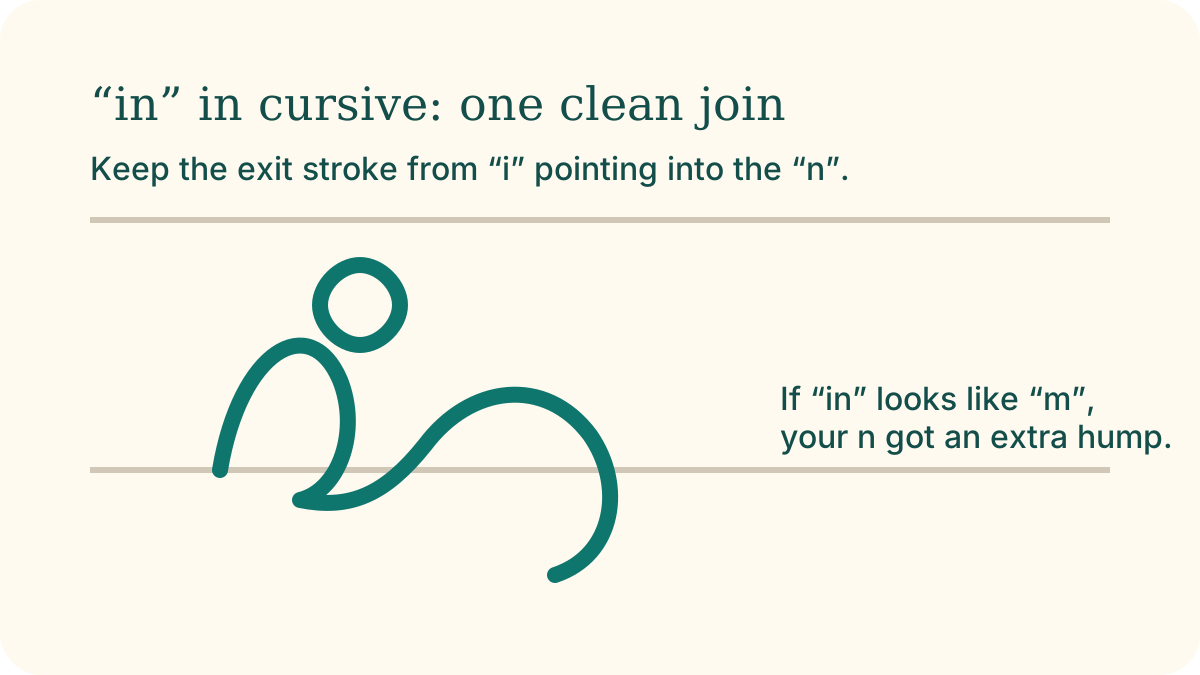
The simple way to write “in” in cursive
This is the version that stays readable for most people. You can make it slanted or more upright later. First, make it repeatable.
1) Write a simple cursive i
Start with a light entry stroke, then a short downstroke. Do not try to decorate it. Keep it small.
2) Exit the i (do not stop)
After the i downstroke, make a small exit stroke that points into the next letter. This is the bridge.
3) Make a single-hump n
Your n is one hump: down, up, down, then exit. If you add a second hump by accident, “in” starts to look like “m”.
4) Add the i dot last
Write the whole word first. Then dot the i. This keeps your rhythm smooth.
Why “in” looks weird (and how to fix it fast)
It looks like “m”
Your n got an extra hump. Say it out loud: “one hump”. Write n n n slowly, then write in in in.
It looks disconnected
Your exit stroke from i is too short or too flat. Make the exit stroke slightly longer and aim it into the n.
It looks like “u”
Your n hump is too round and too low. Let the hump rise a bit higher, then come down cleanly.
Practice words (built around “in”)
Short words help you see the join. Pick one word, write it five times, and circle the clearest one. Then copy that exact shape.
Super short
in, into, inside
Common words
line, time, fine
More joins
nine, mine, shine
If your page starts looking shaky, stop. Take one slow breath, and write in once with your best “teacher pace”. Then do four normal ones.
A tiny 3-minute drill (when you only have a minute)
This drill is small on purpose. You are training the join, not “doing homework”.
Minute 1
Write iiii in cursive. Keep the exit stroke light and moving.
Minute 2
Write nnnn. Say “one hump” in your head so you do not accidentally make m.
Minute 3
Write in in in, then one real word: line or time. Circle the best join.
If you want to make it harder later, practice in after another letter, like ain and oin. The join stays the same, but the entry changes.
One simple outside reference
If you want a quick definition of what cursive means, this is a simple starting point.
Reference
Cursive (Wikipedia) — a basic overview of cursive writing and how it differs from print.
FAQ
Why does “in” in cursive look like “m”?
Most of the time, the n accidentally gets a second hump. Keep n to one hump, and keep the exit stroke from i moving into the n.
Is there one correct way to write “in” in cursive?
No. Cursive styles vary. The goal is a version you can repeat and read.
What should I practice after “in”?
Practice the same join rhythm in short pairs like ni, ne, and no, plus short words like line and time.