Letter practice
How to Write N in Cursive
A cursive n is a hump letter. The lowercase form is built from one smooth arch, while capital N is taller and more formal. This guide shows how to write n in cursive, what a cursive n looks like, and how to practice it in names and short words.
What does a cursive n look like?
Lowercase cursive n usually has one rounded hump with a small entry stroke on the left and an exit stroke on the right. It should look narrower than cursive m, which has more repeated humps.
Animated stroke guide

Still sketch
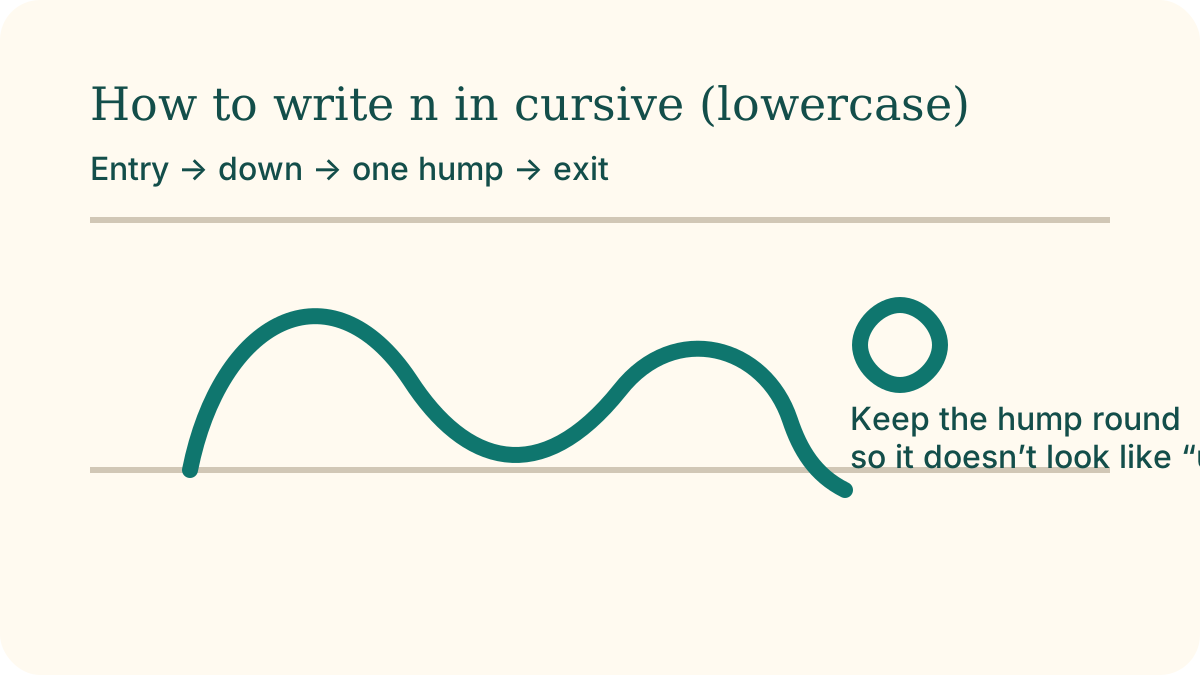
Lowercase n in cursive step by step
If you are asking how to do an n in cursive, start with the lowercase form. It appears often inside words and teaches the hump rhythm used in m, n, u, and w.
1. Entry stroke
Start on the baseline and move upward with a light entry stroke. This prepares the n to connect from a previous letter.
2. Downstroke
Curve down from the midline to the baseline. Keep the stroke smooth instead of making a sharp corner.
3. Single hump
Rise again to form one rounded hump. Lowercase n should not become as wide as m.
4. Exit stroke
Finish with a short exit stroke that points toward the next letter. This keeps words like nice and name connected.
Capital N in cursive
Capital cursive N is used at the start of names, initials, headings, and signatures. It is taller than lowercase n and usually has stronger vertical movement.
Start tall
Begin with a taller entry stroke so the capital N stands apart from the lowercase letters around it.
Keep the shape open
A capital N in cursive can become hard to read if the middle movement is too narrow. Leave enough space for the letter to be recognized.
Practice in names
Try Nora, Nathan, and Nicole. Names help you test how the capital N connects to lowercase letters.
How to make a cursive n readable
Most cursive n problems come from confusing it with m, u, or a small loop. Use these checks before writing faster.
If it looks like m
Make only one hump. Cursive m needs more repeated humps, while lowercase n should stay compact.
If it looks like u
Make the first downstroke and hump clearer. The n should have a more defined arch than u.
If it looks disconnected
Lengthen the exit stroke slightly so the next letter has a clear starting point.
Practice words for cursive n
Practice one isolated letter first, then test it inside real words. Short words make it easier to see whether the n is readable.
A simple 5-minute N practice plan
Minute 1
Write slow lowercase n shapes. Focus on one clear hump and a readable exit stroke.
Minute 2
Write capital N by itself, then compare it with lowercase n.
Minutes 3-4
Practice na, ne, ni, no, and nu. Keep the join smooth.
Minute 5
Write one short line: Nora needs nice notes. Circle the clearest N and repeat that style.
One simple outside reference
If you want a quick definition of what cursive means, this is a safe starting point.
Reference
Cursive (Wikipedia) — a basic overview of cursive writing and how it differs from print.
FAQ
What does a cursive n look like?
A lowercase cursive n usually looks like one smooth hump with an entry stroke and an exit stroke. A capital cursive N is taller and more formal, often used at the start of names and initials.
How do you write a lowercase n in cursive?
Start with a light entry stroke, rise to the midline, curve down to the baseline, form one rounded hump, and finish with a clear exit stroke.
How do you write a capital N in cursive?
Start with a taller entry stroke, form the main capital shape with steady spacing, and finish with an exit stroke if it needs to connect to the next letter.
How do you make a cursive n not look like m?
Keep it to one hump. If your n becomes too wide or has too many repeated arches, it can start to look like cursive m.